How to Spot a Fake Omega Watch: Expert Authentication Tips
To spot a fake Omega watch, authenticate it by examining its serial number, movement, dial details, weight, finishing quality, and documentation. When in doubt, have it professionally inspected. While some counterfeit Omega watches can be identified within minutes, today's high-end replicas are becoming increasingly sophisticated, making professional authentication an essential step before purchasing any pre-owned Omega.
Omega has earned a reputation as one of the world's most respected luxury watch brands. From the iconic Speedmaster Moonwatch to the legendary Seamaster Diver collection, Omega timepieces are sought after by collectors, enthusiasts, and investors alike. Unfortunately, this popularity has also made Omega one of the most commonly counterfeited watch brands on the market.
Whether you're considering a pre-owned Omega purchase, inheriting a family watch, or simply verifying a piece already in your collection, understanding how to authenticate an Omega can protect you from costly mistakes. Below, we'll walk through the most effective ways to verify an Omega watch, from simple at-home checks to professional authentication methods.
Start with the Overall Quality
One of the easiest ways to identify a counterfeit Omega is by paying attention to overall quality and craftsmanship.
Omega watches are manufactured to exceptionally high standards. The case finishing, bracelet construction, dial printing, and movement components should all appear precise and refined. Even older vintage models typically exhibit impressive attention to detail.
Common warning signs include:
- Uneven or blurry dial printing
- Misaligned hour markers
- Rough edges on the case or bracelet
- Lightweight construction
- Poorly engraved logos
- Inconsistent finishing
If something feels cheap or poorly made, there's a good chance the watch is not authentic.
While some modern replicas can closely mimic genuine Omega watches, many counterfeit pieces still fail this basic quality test.
Verify the Serial Number
Every authentic Omega watch has a unique serial number.
Depending on the model and production year, the serial number may be located on:
- The case back
- The lug
- The movement
- Inside the watch case
The serial number should be cleanly engraved, not poorly etched or laser-printed.
A few important things to remember:
- The serial number should match any accompanying paperwork.
- Missing serial numbers are a major red flag.
- Duplicate serial numbers appearing on multiple watches can indicate counterfeit production.
While finding a serial number does not automatically prove authenticity, the absence of one should raise immediate concerns.
Examine the Dial Closely
The dial is often where counterfeiters make their most obvious mistakes.
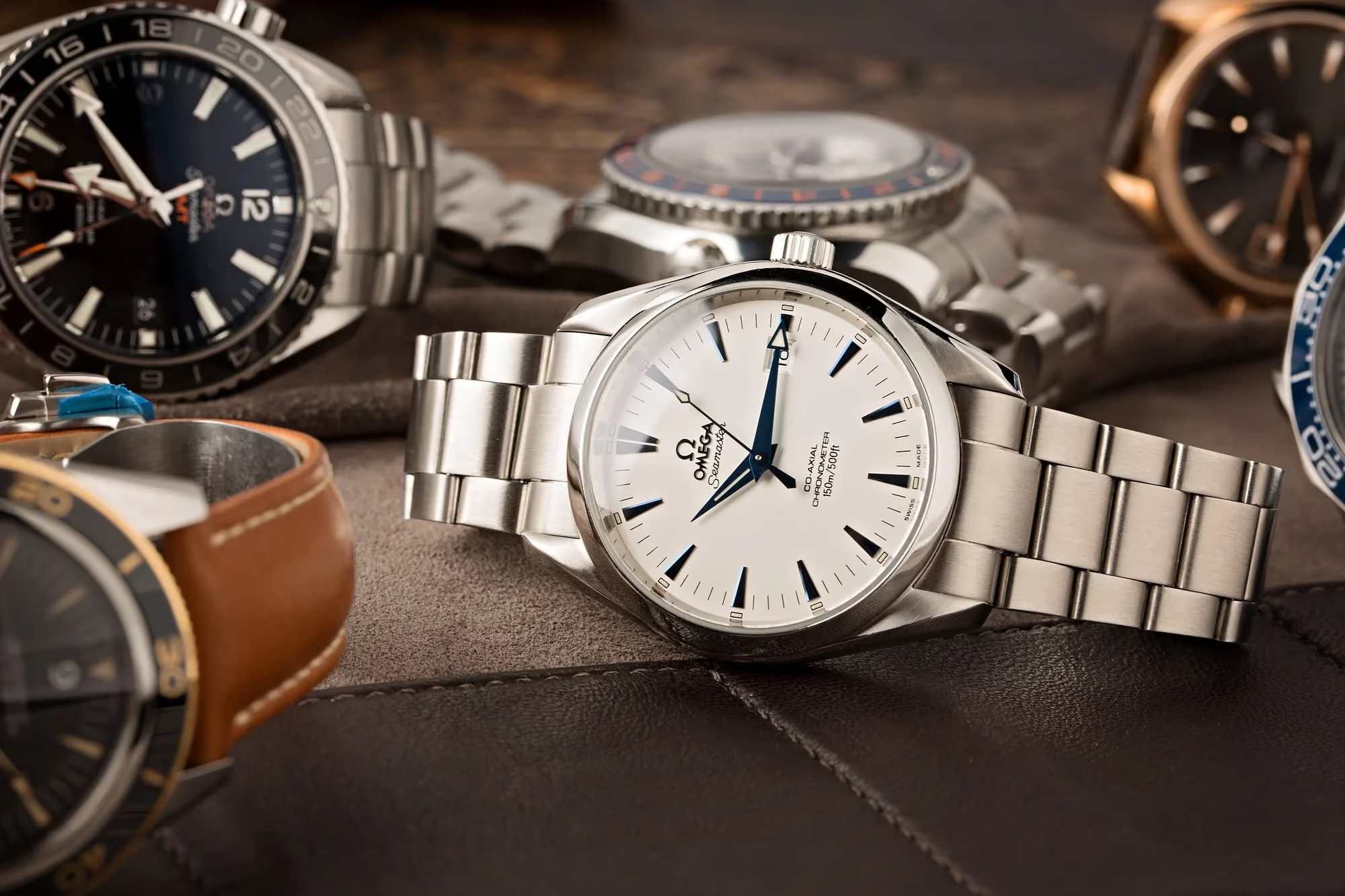
Omega's dial manufacturing standards are extremely strict. Logos, text, markers, and hands should all appear crisp and precisely aligned.
When inspecting the dial, look for:
Logo Placement
The Omega logo should be perfectly centered and correctly positioned. Crooked logos or uneven spacing are warning signs.
Printing Quality
The text should be sharp and readable under magnification. Smudged lettering or inconsistent font sizes often indicate a fake.
Lume Application
On models with luminous markers, the lume should be evenly applied and consistent throughout the dial.
Date Window Alignment
Date windows should be perfectly aligned. Misaligned dates or uneven cutouts are frequently found on counterfeit pieces.
A simple magnifying loupe can reveal many flaws that are invisible to the naked eye.
Check the Movement
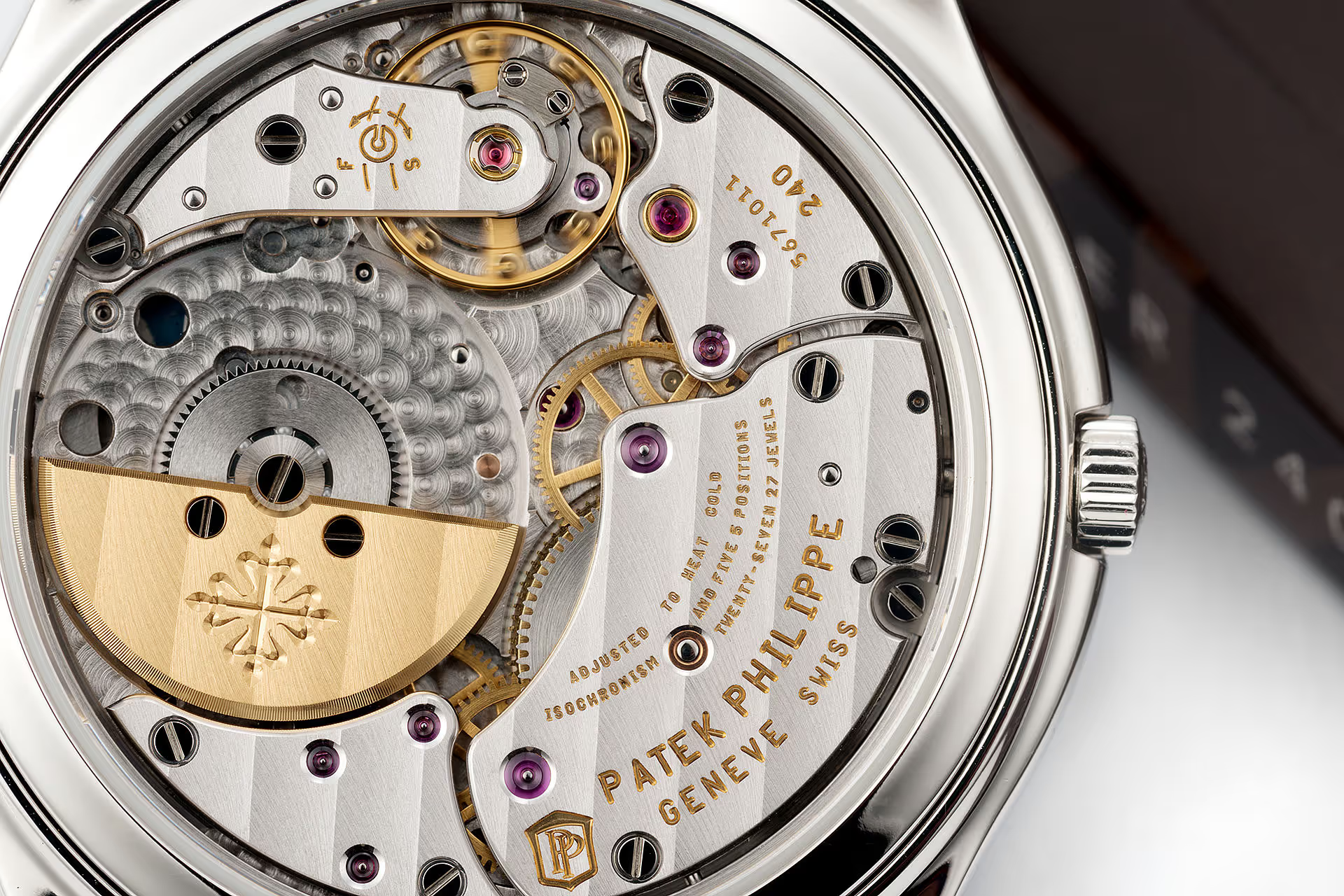
The movement is one of the most reliable ways to authenticate an Omega watch.
Authentic Omega watches feature highly engineered mechanical or quartz movements with exceptional finishing and precise construction.
If the watch has a display case back, you may be able to inspect the movement directly.
Look for:
- Omega branding on the movement
- High-quality finishing
- Proper engravings
- Consistent component placement
Counterfeit watches often use generic movements decorated to resemble Omega calibers. While these replicas may appear convincing from a distance, closer inspection frequently reveals inconsistencies.
Because movement authentication requires experience and specialized tools, many collectors rely on professional watchmakers for this step.
Evaluate the Weight and Feel
Luxury watches generally feel substantial due to the materials used in their construction.
Omega watches are typically manufactured using:
- Stainless steel
- Titanium
- Ceramic
- Gold
- Platinum
Counterfeit manufacturers often use lower-quality metals to reduce costs.
As a result, fake Omega watches frequently feel:
- Too light
- Hollow
- Poorly balanced
While weight alone cannot determine authenticity, it can serve as a useful indicator when combined with other inspection methods.
Inspect the Bracelet and Clasp
The bracelet and clasp provide valuable clues about authenticity.
Omega bracelets are known for precise engineering and comfortable wear. The links should articulate smoothly without excessive looseness or roughness.
Pay close attention to:
- Engravings on the clasp
- Omega logos
- Reference numbers
- Finishing consistency
Counterfeit bracelets often exhibit poor machining, sharp edges, and inconsistent brushing or polishing.
Many fake watches devote most of their production effort to the watch head while neglecting bracelet quality, making this an important area to inspect.
Review the Documentation and Packaging
Original paperwork and packaging can help support a watch's authenticity.
Items to review include:
- Warranty cards
- Chronometer certificates
- Instruction manuals
- Original boxes
- Purchase receipts
However, buyers should be careful not to rely solely on paperwork.
Modern counterfeiters have become increasingly skilled at reproducing boxes, cards, and manuals. In some cases, fake packaging can appear highly convincing.
Documentation should always be viewed as supporting evidence rather than definitive proof.
Compare Against Known Authentic Examples
One of the most effective self-authentication methods is direct comparison.
Before purchasing an Omega watch, compare it against:
- Official Omega product images
- Trusted dealer listings
- Verified collector resources
- Auction house photographs
Pay attention to:
- Hand shapes
- Dial layouts
- Bezel markings
- Case dimensions
- Bracelet design
Even subtle differences can reveal a counterfeit.
This method is especially useful when evaluating popular models such as the Speedmaster Professional, Seamaster Diver 300M, and Aqua Terra.
Professional Authentication Options
While many authenticity checks can be performed at home, professional authentication remains the safest option for high-value purchases.
Authorized Omega Service Centers
An Omega service center can inspect the watch and verify whether the components are genuine.
This is often the most authoritative authentication option available.
Independent Watchmakers
Experienced watchmakers regularly inspect luxury timepieces and can identify counterfeit parts, replacement components, and incorrect movements.
A skilled independent professional can often detect issues that casual collectors may overlook.
Professional Pre-Owned Watch Dealers
Reputable luxury watch dealers authenticate watches before buying or selling them.
Because their reputation depends on accuracy, these professionals typically have extensive experience identifying counterfeit Omega watches.
Purchasing through a trusted dealer significantly reduces the risk of acquiring a fake timepiece.
Red Flags that Should Never Be Ignored
If you encounter any of the following warning signs, proceed with caution:
- The price seems dramatically below market value.
- The seller refuses to provide detailed photos.
- The serial number is missing.
- The watch lacks provenance or ownership history.
- Documentation does not match the watch.
- The seller avoids professional inspection requests.
Many counterfeit purchases occur because buyers focus on getting a bargain rather than verifying authenticity.
Remember that if a deal appears too good to be true, it often is.
Buy with Confidence at Big Moe Watches
The safest way to avoid counterfeit Omega watches is to purchase from a trusted source that prioritizes authenticity and transparency.
At Big Moe Watches, every Omega watch undergoes a thorough authentication process before being offered for sale. Our team carefully evaluates serial numbers, movements, case details, dial characteristics, and overall condition to ensure that every timepiece meets the standards serious collectors expect.
If you're considering purchasing your first Omega or adding another piece to your collection, browse our curated inventory or contact our team for expert guidance. We're committed to helping you find an authentic Omega watch you'll enjoy for years to come.