Full Guide to the Rolex Cyclops Lens
The Cyclops lens is one of the most recognisable features in Rolex design. Sitting neatly above the date window, this small curved lens enhances the visibility of the date and has become a signature element of Rolex watches. While it may seem like a simple detail, the Cyclops lens has a fascinating history and serves both functional and stylistic purposes.
This guide explores everything you need to know about the Rolex Cyclops lens, its history, purpose, technology, and its role in shaping Rolex’s distinctive identity.
What Is the Cyclops Lens?
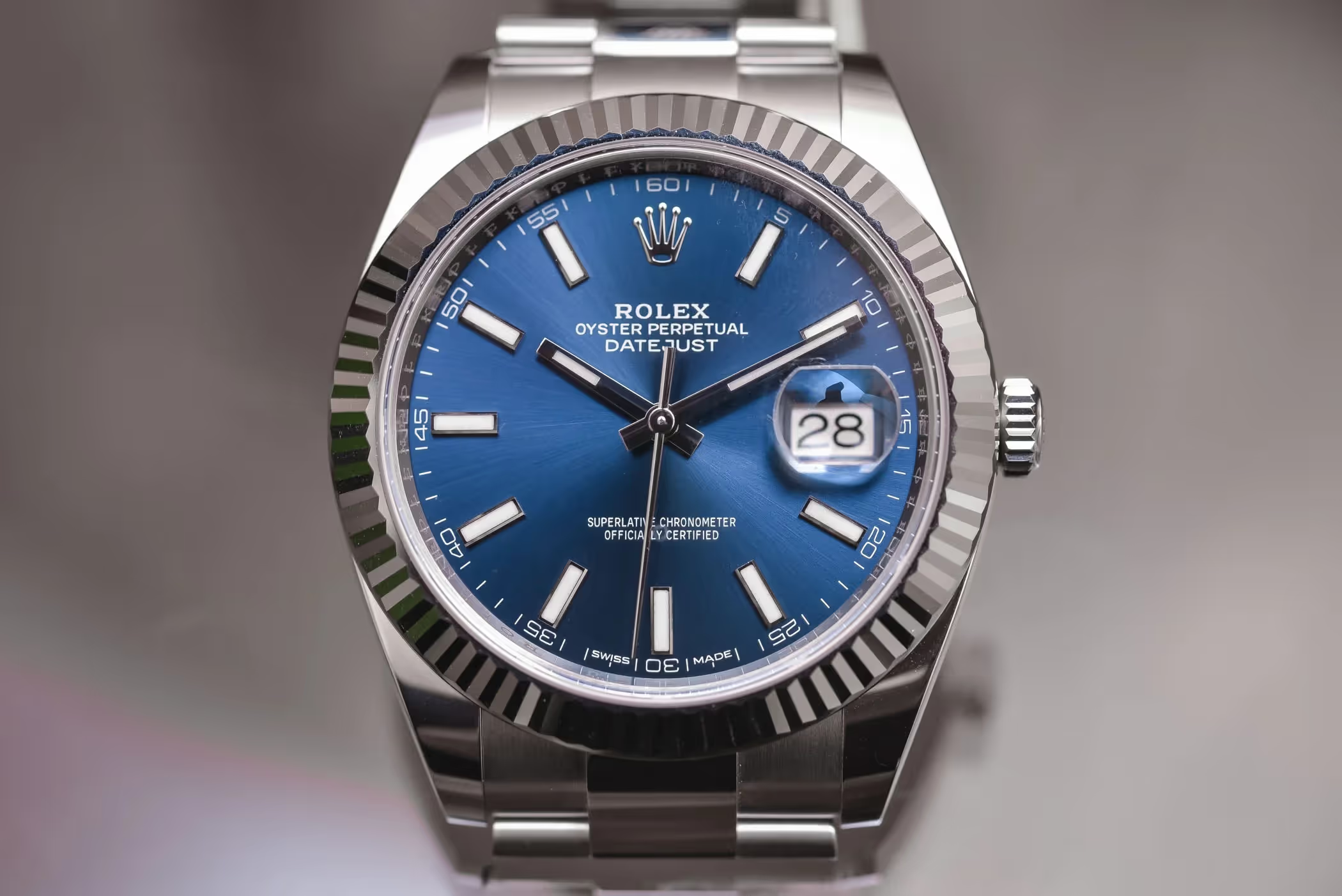
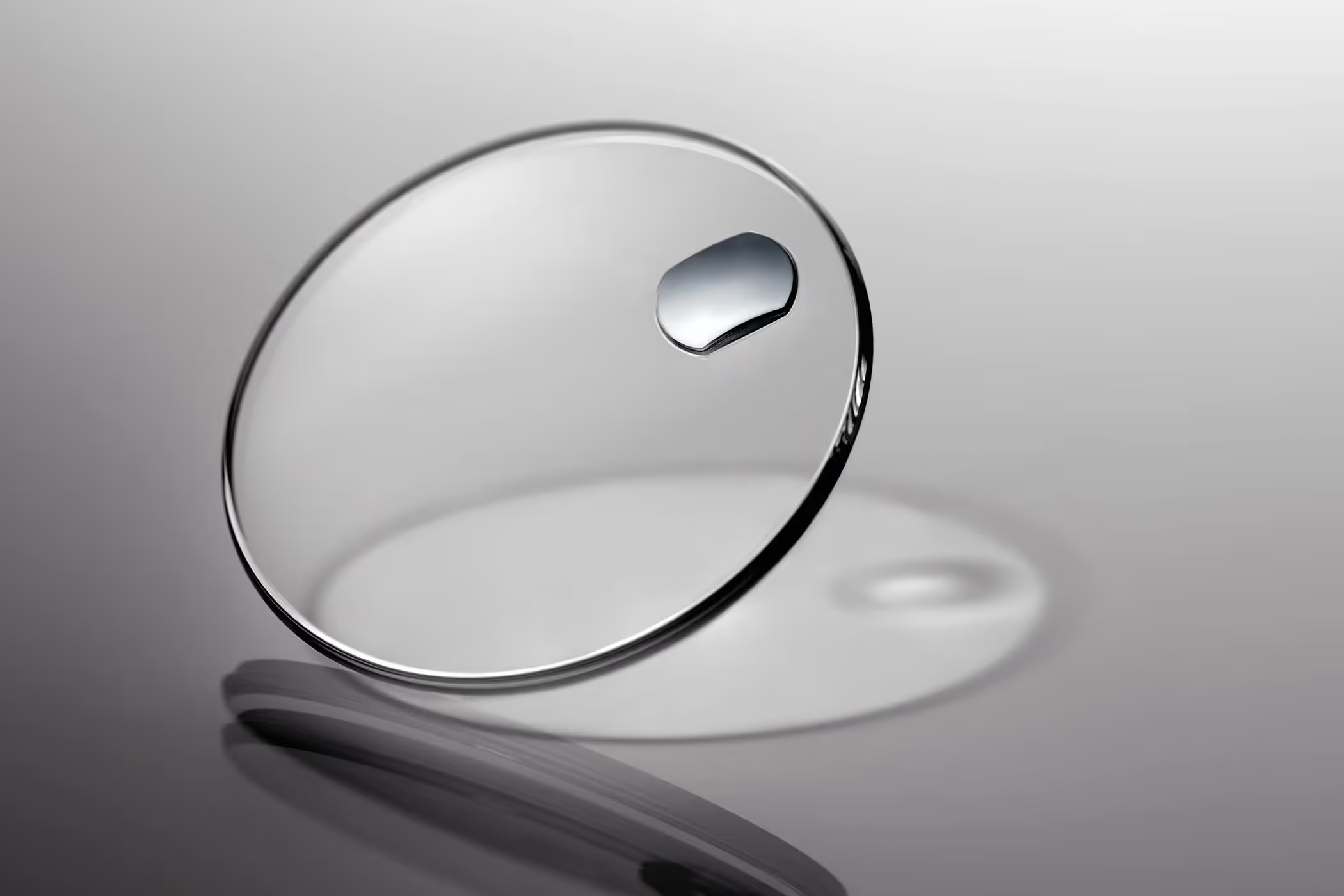
The Cyclops lens is a small magnifying lens positioned directly over the date window on the watch’s crystal. Its primary role is to magnify the data for improved readability. The standard magnification on most modern Rolex watches is 2.5 times, which makes the date appear much larger than it is.
This lens is most commonly found on models like the Datejust, Day-Date, GMT-Master II, and Submariner Date. It does not appear on every Rolex watch, models like the Oyster Perpetual or Submariner No Date do not include this feature.
The Origin of the Cyclops
The Cyclops lens was first introduced by Rolex in 1953 on the Datejust. The idea reportedly came from Hans Wilsdorf, the founder of Rolex, who wanted to make it easier for his wife to read the date on her watch. At the time, wristwatch dials were smaller and harder to read, especially for those with less-than-perfect vision.
Rolex patented the Cyclops lens design in the early 1950s, and it quickly became a standard feature on most of their date-equipped models. Its unique shape and placement made it instantly recognisable and added to the Rolex brand identity.
Why Does the Cyclops Lens Matter?
The Cyclops lens isn’t just a design detail, it plays a vital role in both functionality and branding:
- Improves readability by magnifying the date 2.5 times, making it easier to read at a glance.
- Adds a signature look that’s instantly recognisable from a distance.
- Serves as a distinguishing feature between Rolex and other luxury watch brands.
- Enhances the user experience, especially for professionals and older wearers.
- Helps with brand consistency, as it’s found on many of Rolex’s most popular models.
Evolution of the Cyclops Lens
Initially, the Cyclops lens was made from acrylic, a material used for the crystals on Rolex watches until the 1980s. These lenses were glued onto the surface of the crystal and had a noticeable curve. However, acrylic scratched easily, and although it could be polished out, it lacked durability.
When Rolex transitioned to sapphire crystal, it began integrating the Cyclops lens more securely. Sapphire crystal is highly scratch-resistant, but it presents challenges when attaching external components, such as a lens. For years, early sapphire versions suffered from reflection and glare issues.
To address this, Rolex began applying an anti-reflective coating beneath the Cyclops lens to enhance visibility. More recent models feature coating on both sides, significantly improving clarity.
Does Every Rolex Have a Cyclops?
Not all Rolex models include a Cyclops lens. As mentioned earlier, models without a date complication, like the Oyster Perpetual or Explorer naturally do not feature it. Some collectors prefer the clean symmetry of these watches.
Interestingly, a few watches with date complications still skip the Cyclops, particularly in vintage military models or watches made for special contracts. A rare example is the Sea-Dweller, which lacked the Cyclops for many years due to the thickness of its crystal and the pressure requirements for deep-sea diving. However, the modern Sea-Dweller now includes the Cyclops.
Cyclops Lens and Counterfeit Watches
One surprising function of the Cyclops lens is its frequent use in authenticating a Rolex. Many counterfeit watches struggle to replicate the 2.5x magnification correctly. Often, the date appears barely magnified or incorrectly aligned. This makes the Cyclops a helpful detail for experienced collectors and watch experts when inspecting a timepiece.
Common Misconceptions
One of the most common myths about the Cyclops lens is that it scratches easily. This is true for older acrylic versions, but the sapphire crystal used today is highly resistant to wear and tear.
Another misconception is that the lens can easily fall off. Again, this was more common with acrylic crystals. Modern Rolex watches have the lens fused directly into the sapphire crystal, making it nearly impossible to detach without damaging the glass.
Some also assume that the Cyclops is purely decorative. In reality, Rolex developed and patented the lens for a practical reason, and its continued use is based on its functionality and heritage.
Collectors and the Cyclops
Among Rolex collectors, opinions about the Cyclops lens vary. Some love it for its history and utility, while others prefer the clean, balanced look of no-date dials. Specific models are even more desirable because they feature unusual variations of the Cyclops, like rare prototypes or models where it was omitted altogether.
In modern collections, Rolex has done a good job catering to both preferences, offering options with and without the lens depending on the model.
Buy Your Rolex Watch in Dubai
The Cyclops lens is more than just a magnifying glass, it’s a symbol of Rolex innovation, practicality, and timeless design. Introduced over 70 years ago, it remains one of the most distinctive and valuable features in the world of horology.
Whether you’re a first-time buyer or a seasoned collector, understanding the Cyclops lens adds another layer of appreciation to the art and precision of Rolex watches.
Suppose you’re shopping for an authentic Rolex with or without the Cyclops. In that case, Big Moe Watches offers a curated collection of unworn timepieces in excellent condition, delivered with trust, quality, and same-day service in Dubai.