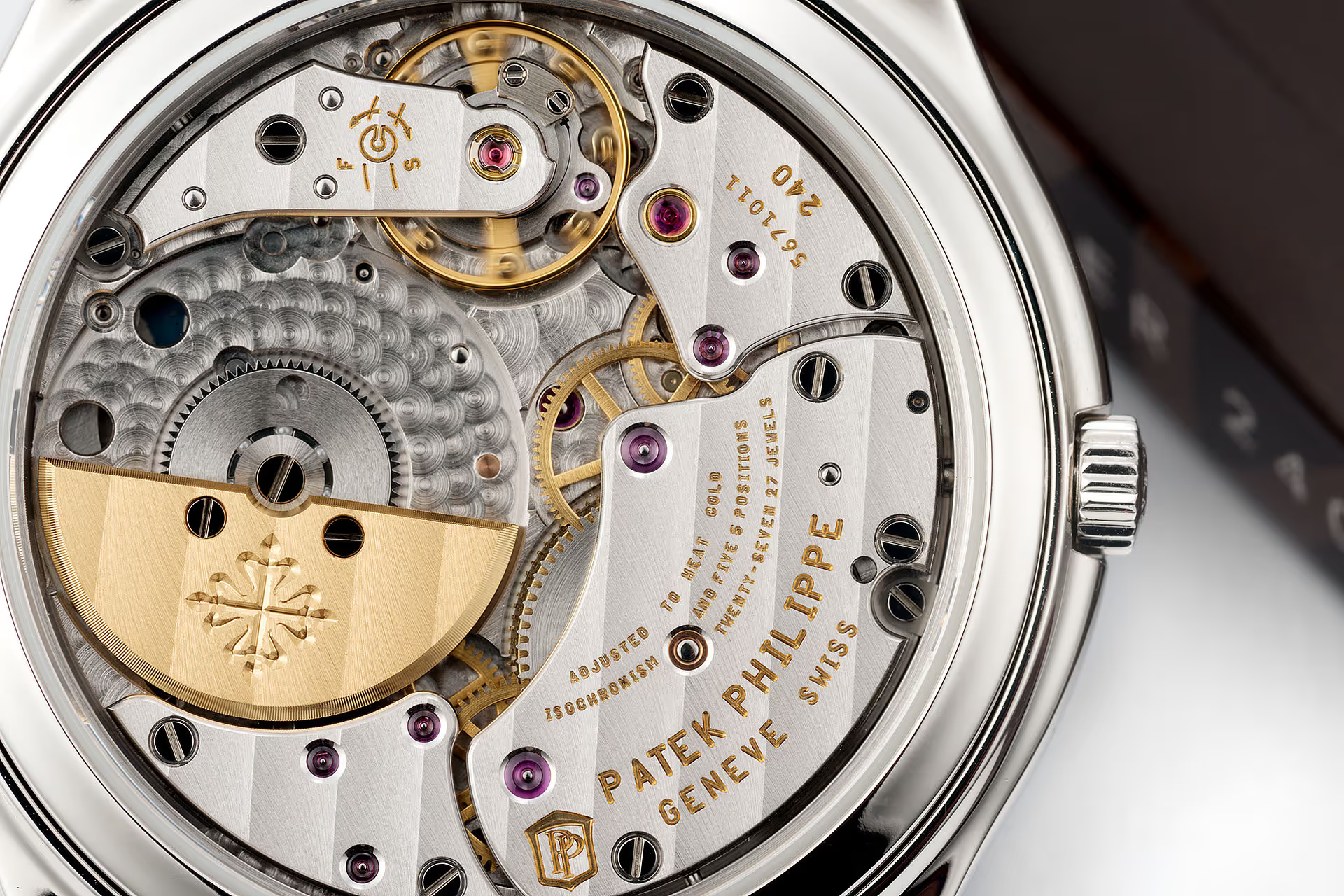
Difference Between an Annual Calendar and a Perpetual Calendar Watch
Complications are what transform a mechanical watch from a simple timekeeper into a piece of serious horological engineering. Among the most respected complications in traditional watchmaking are the annual calendar and the perpetual calendar.
Both track the date automatically and adjust for months with different lengths. However, they operate differently and require different levels of mechanical complexity.
Understanding the difference between an annual calendar and a perpetual calendar watch helps collectors appreciate the craftsmanship behind these complications and choose the one that best suits their lifestyle.
What Is an Annual Calendar Watch?
An annual calendar watch is designed to automatically adjust the date for months that have 30 or 31 days.
This means the watch recognizes that some months are shorter than others. However, it does not automatically account for February.
Because February has either 28 or 29 days, the wearer must manually adjust the date once a year at the end of February.
Key Characteristics of an Annual Calendar Watch
Annual calendar watches are admired because they offer useful functionality without the extreme complexity of a perpetual calendar.
Typical features include:
- Automatic adjustment for 30 and 31 day months
- One manual correction per year (after February)
- Often displays day, date, and month
- Mechanically simpler than perpetual calendars
The annual calendar complication was famously developed by Patek Philippe in the 1990s and quickly became popular among collectors who wanted advanced functionality without the cost of a perpetual calendar.
What Is a Perpetual Calendar Watch?
A perpetual calendar watch takes the complication much further.
A perpetual calendar automatically accounts for every variation in the calendar cycle. This includes months with 30 or 31 days, February’s shorter length, and even leap years.
When properly set, a perpetual calendar watch will continue displaying the correct date for decades without manual adjustment.
Many perpetual calendars are programmed to remain accurate until the year 2100, when the Gregorian calendar slightly shifts.
Key Characteristics of a Perpetual Calendar Watch
Perpetual calendars are considered one of the most prestigious complications in traditional watchmaking.
They typically include:
- Automatic adjustment for all months
- Automatic leap year recognition
- Day, date, month, and often moonphase displays
- Extremely complex mechanical movements
Because of the complexity involved, perpetual calendar watches are significantly more expensive and harder to manufacture.
Why Perpetual Calendars Are More Complicated
From a watchmaking perspective, the perpetual calendar is a remarkable mechanical achievement.
Inside the movement, a system of cams, gears, and programmed mechanisms “remembers” the structure of the Gregorian calendar. This mechanical memory allows the watch to anticipate date changes months and years in advance.
Some perpetual calendar movements contain hundreds of individual components working together to track the full calendar cycle.
This level of complexity is why perpetual calendars are often found in high-end watches from brands such as Patek Philippe, Audemars Piguet, and Vacheron Constantin.
If you are interested in rare Patek complications, you may also enjoy reading our article on the most expensive patek watches in history.
Annual Calendar vs Perpetual Calendar: The Main Differences
Although the two complications may look similar on the dial, they behave differently in daily use.
Adjustment Requirements
- Annual calendar: requires one adjustment each year after February
- Perpetual calendar: requires no adjustment for decades when properly set
Mechanical Complexity
- Annual calendar: moderately complex movement
- Perpetual calendar: extremely complex movement with many additional components
Price Range
- Annual calendar watches are typically more accessible
- Perpetual calendars are among the most expensive complications in watchmaking
Collector appeal
- Annual calendars appeal to collectors seeking practicality
- Perpetual calendars attract collectors who value technical mastery
Which Calendar Complication Is Better?
Neither complication is objectively better. The right choice depends on the collector’s priorities.
Some collectors prefer the practicality of an annual calendar. It provides useful functionality and mechanical sophistication without the higher price and complexity of a perpetual calendar.
Others appreciate the engineering brilliance behind perpetual calendars. These watches demonstrate the pinnacle of traditional mechanical watchmaking.
Both complications showcase the creativity and innovation that define high horology.
Why Collectors Value Calendar Complications
Calendar complications represent more than convenience. They demonstrate the ability of mechanical watchmaking to replicate complex timekeeping systems without digital technology.
The ability to program a mechanical movement to follow the structure of the calendar is one of the most impressive achievements in traditional horology.
This is why watches featuring annual or perpetual calendars often hold strong appeal among collectors.
Get Complicated Luxury Watches with Big Moe Watches
At Big Moe Watches, we specialize in sourcing exceptional luxury timepieces, including highly complicated watches from brands like Patek Philippe, Audemars Piguet, and Richard Mille.
Whether you are looking for an annual calendar, a perpetual calendar, or another rare complication, our team can help you locate the right watch through trusted global networks.